Ground Screws for Ground Mounted PV: Fast, Clean and Often the Only Reasonable Foundation

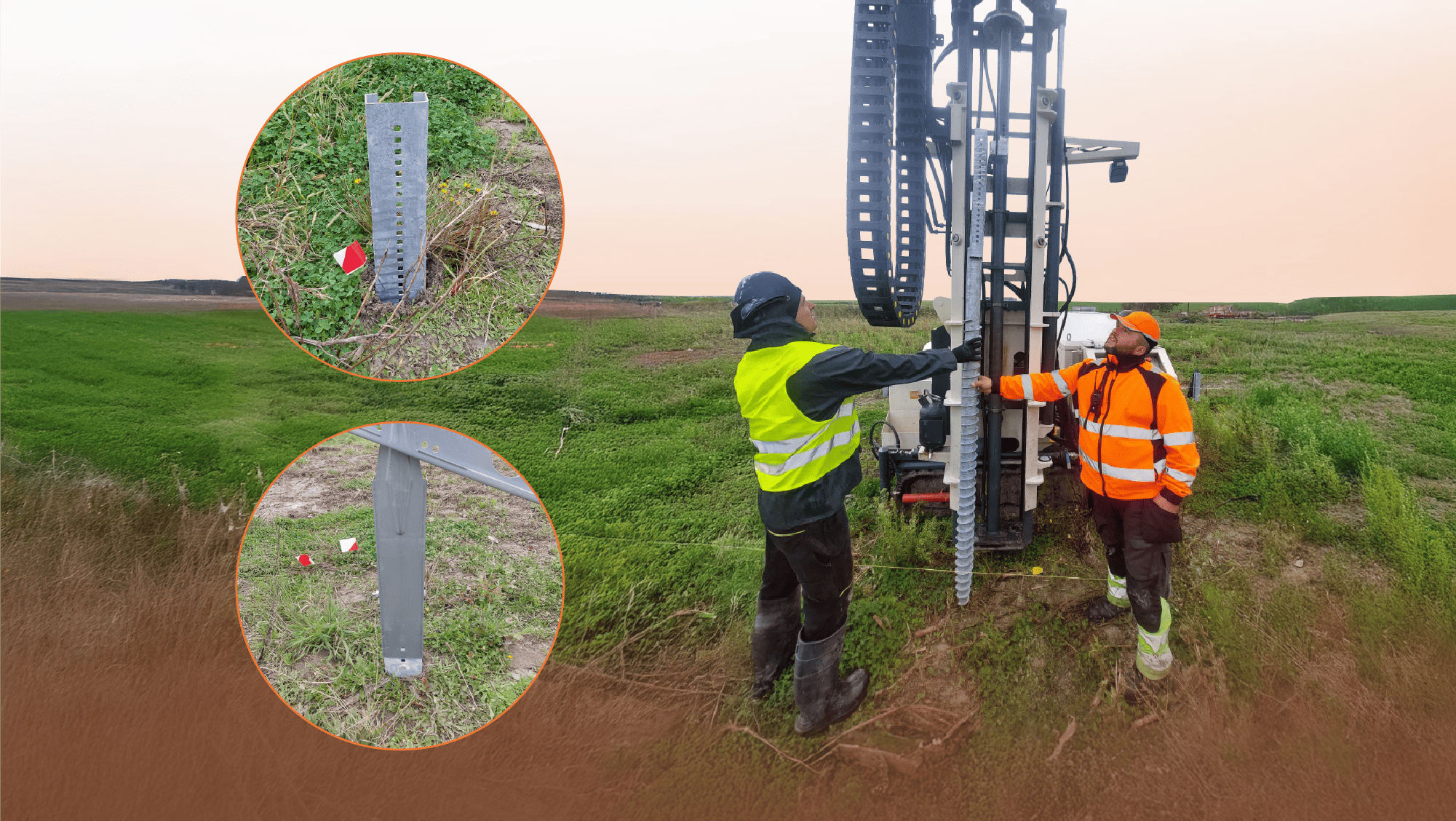
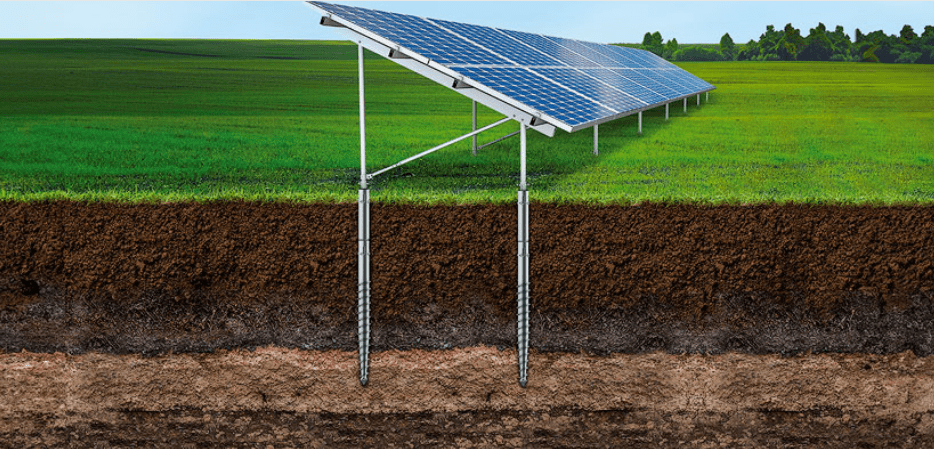
Ground screws are screw type foundation elements installed directly into the soil. In many real world projects, traditional foundations (concrete footings or driven piles) are not ideal or not feasible at all — due to problematic soil, strict noise or vibration limits, tight schedules, or temporary installations. In these cases, ground screws excel: installation is fast, load capacity is immediate, and disturbance to the land is minimal. This article briefly explains when ground screws make the most sense — and when they are practically the only viable option — what their key advantages are, and what to pay attention to. We also include a practical comparison of the types most commonly used in PV projects.

When Traditional Foundations Reach Their Limits

  • Soil and groundwater: fill layers, soft or heterogeneous soils, elevated groundwater level — excavation and concrete can be technically and time wise risky.
  • Logistics and scheduling: concrete transport, pump trucks and excavation often do not fit the construction timeline.
  • Temporary use and reinstatement: for leased or sensitive land, simple removal and restoration to the original condition is essential.

When Ground Screws Are the Right Choice

  • Terrain flexibility: easy height adjustments and precise leveling, even on sloped ground.
  • Winter or “wet” conditions: where concrete work is not feasible due to weather or high groundwater, installation by screwing is often the only workable method.
  • Low ecological impact: reduced transportation demand, no concrete, easier site restoration after decommissioning.

When screws are practically the only solution

  • Strict land disturbance regulations: requirements for minimal invasiveness and quick land recovery.
  • Extremely compressed schedules: fast installation, relocation, or repowering with minimal “wet works”.

Note: On rocky subsurface, ground screws may be limited. Geotechnical investigation and pull out tests always govern suitability.

Key Advantages We See Most Often in Projects

Ground screws provide several crucial benefits for PV construction: they enable very rapid installation with immediate loading capacity, which greatly improves schedule predictability. Their concrete free design reduces CO₂ footprint, simplifies logistics, and keeps the site clean. They are also fully reversible — allowing quick and non destructive removal at the end of the asset’s life.

What to Pay Attention To

To ensure proper performance, a few key factors must be considered. A geotechnical survey — even just a few probes or pull out tests — significantly reduces project risk.

Correct installation is essential, with focus on verticality, torque, and depth, as these parameters directly affect load capacity. Corrosion protection and longevity must match the site’s corrosion category.

And finally, underground obstacles such as boulders or debris may require pre drilling or minor position adjustments.

How Products and Manufacturers Differ

Not all ground screws are the same. They vary in length, diameter, wall thickness, tip and thread geometry, head types, and surface protection. Documentation (structural data, test reports) and support services (training, installation equipment availability) are equally important.

Tip: It’s not just about “the longest and the thickest.” Correct thread, tip and head selection — tailored to soil and mounting structure — often determines installation speed and final load performance.

Choosing the right manufacturer is also essential. We have verified dozens for you and recommend only reliable partners — such as BAYO.S — to ensure products and service meet the highest standards.

How we approach this at Raylyst Solar in cooperation with our partners

  • Input assessment: soil type, groundwater level, pull-out test results, consideration of local loads (wind/snow), system lifetime.
  • Design and validation: preliminary sizing, recommendations for specific ground screw dimensions and head types.
  • Connection to structure: ensuring proper interface with the mounting system, close coordination between ground screw manufacturer and structure supplier.

Ground screws are not just an “alternative” — in many scenarios, they are the fastest, cleanest, and sometimes the only feasible foundation method for ground mounted PV. The key is thorough geotechnical evaluation, correct product selection, and high quality installation — combined with a trusted manufacturer.

Do you have a project where you are considering ground screws, or are unsure which foundation solution is the most suitable? Contact us — we will help you design the right solution for your project.