What Factors Influence the Degradation of Efficiency in Modern Solar Panels

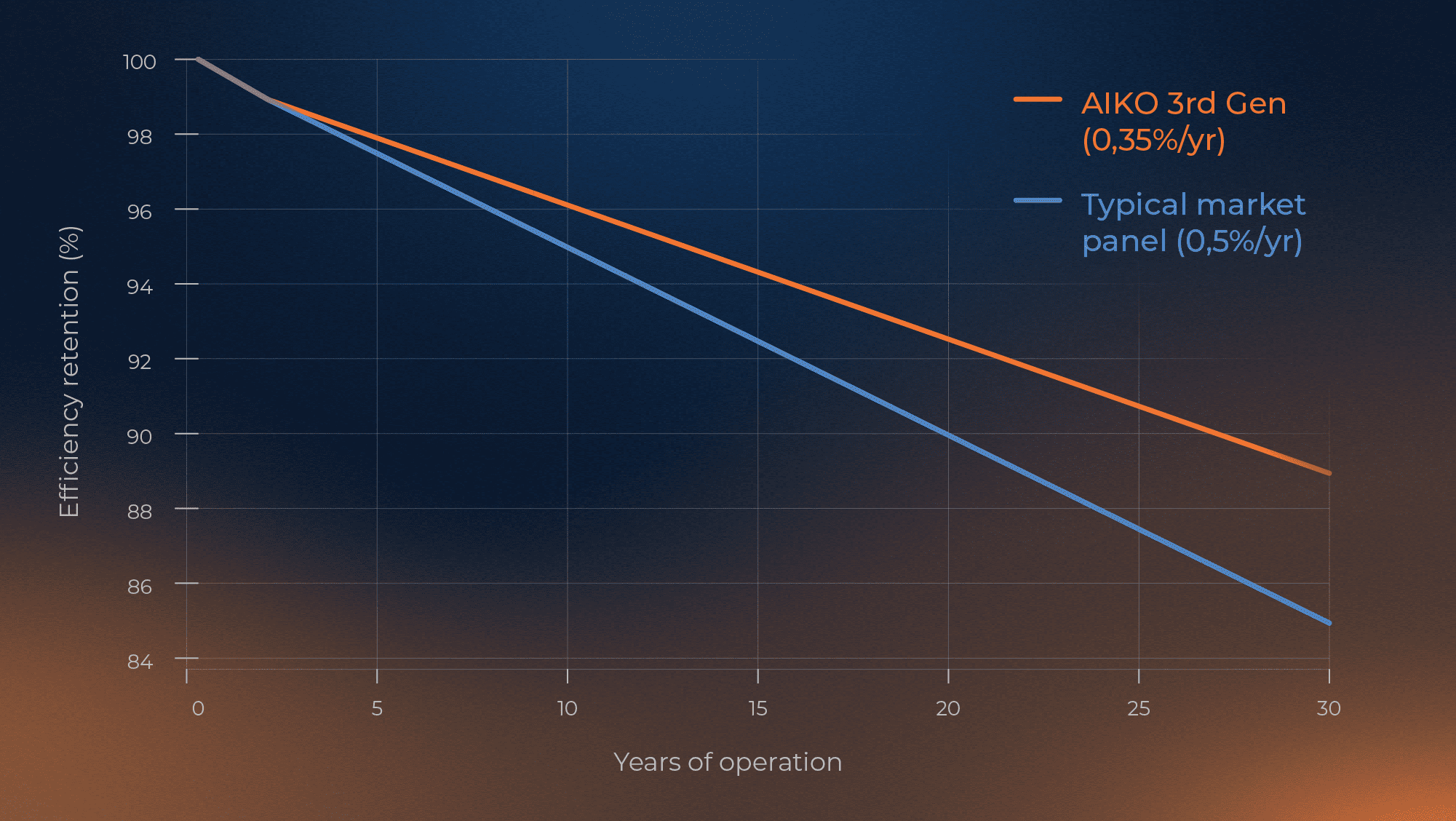
Long-term efficiency stability is one of the key factors determining the success of any photovoltaic system. While most panels deliver high performance in their first years of operation, it is essential to assess whether a panel can maintain high efficiency even after many years in service — as is the case, for example, with AIKO 3rd generation panels. What contributes to a more gradual efficiency degradation over time?

Back-Contact Cell Design

One of the key factors contributing to lower performance degradation in AIKO 3rd generation panels is the placement of electrical contacts on the rear side of the cell. This design reduces the risk of localized overheating, mechanical stress, and the formation of microcracks, which are common in panels with front-side contacts. Rear-side contacts enable more even heat distribution and lower susceptibility to mechanical damage, directly contributing to reduced performance degradation and a longer service life of the panel.

Resistance to Temperature Fluctuations and Mechanical Stress

Solar panels are exposed to temperature fluctuations and mechanical loads that can affect their long-term performance. Temperature differences between day and night, as well as wind and snow loads, may lead to gradual material degradation and performance losses. AIKO 3rd generation panels are designed to withstand these influences through robust construction and high-quality manufacturing, helping maintain stable performance even under demanding operating conditions.

High-Quality Materials for Long-Term Durability

Material selection is another important factor influencing efficiency degradation. In conventional panels, long-term exposure to moisture and chemical reactions can gradually impair the electrical properties of solar cells. AIKO 3rd generation panels therefore utilize materials with high long-term stability, minimizing the impact of moisture and chemical processes and contributing to lower performance degradation over time.

Structural Stability for Long-Term Performance

Performance degradation can also result from uneven loading of individual cells or mechanical stress caused by temperature and humidity changes. AIKO 3rd generation panels are engineered to distribute both electrical and mechanical loads evenly across the module, minimizing performance deviations between cells. The result is more stable panel behavior and a lower risk of long-term degradation.

It is therefore clear that efficiency stability is not a parameter that determines performance in the first year of operation, but rather over several decades. AIKO 3rd generation panels combine structural design, material quality, and resistance to operational stress to ensure that high performance is not only achieved at the beginning, but maintained over the long term. This characteristic translates over time into higher total energy output and more stable overall system performance.

What impact does performance degradation have on project profitability? We will explore the implications of performance degradation for project return and profitability in an upcoming article.

Would you like to work on projects using panels that maintain high performance over long-term operation and help maximize total energy production? Get in touch with us, we will be happy to advise you on selecting panels and technologies best suited for your installation projects.